Le Courant: North Hatley’s New Official Print Newspaper… and a Few Questions About Transparency!
Have you had a chance to receive a printed copy of the Municipality of North Hatley’s new official newspaper, Le Courant? This new bilingual publication features a series of articles about our village, its history, its
North Hatley Info
October 9, 2026 · 7 min read
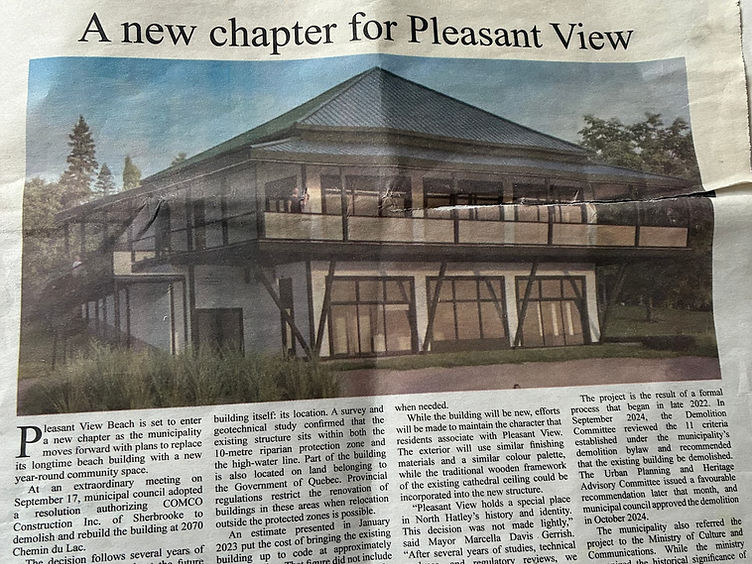
Have you had a chance to receive a printed copy of the Municipality of North Hatley’s new official newspaper, Le Courant?
This new bilingual publication features a series of articles about our village, its history, its residents, and its projects.
Here are a few photos of pages from the new newspaper, Le Courant.
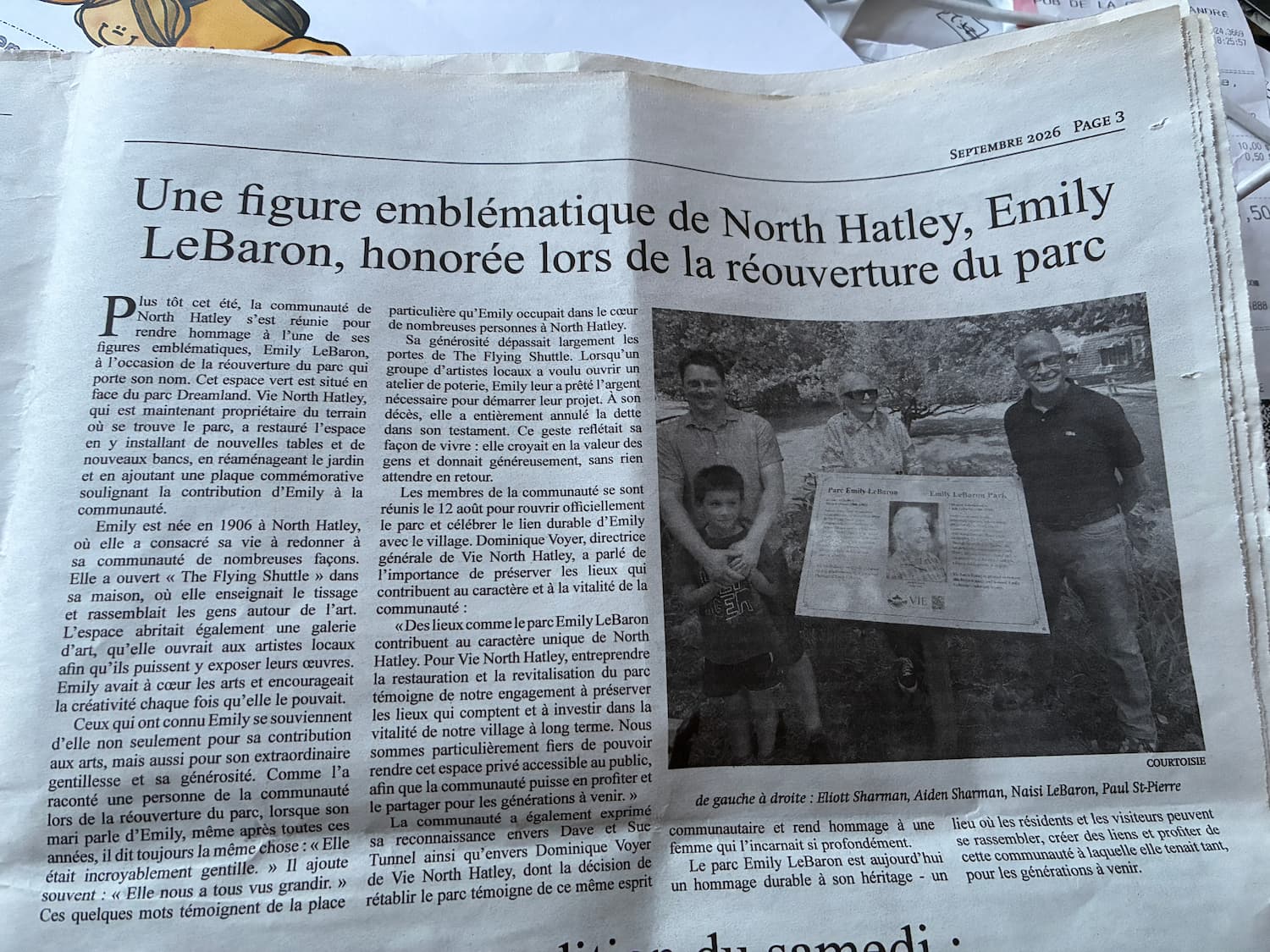
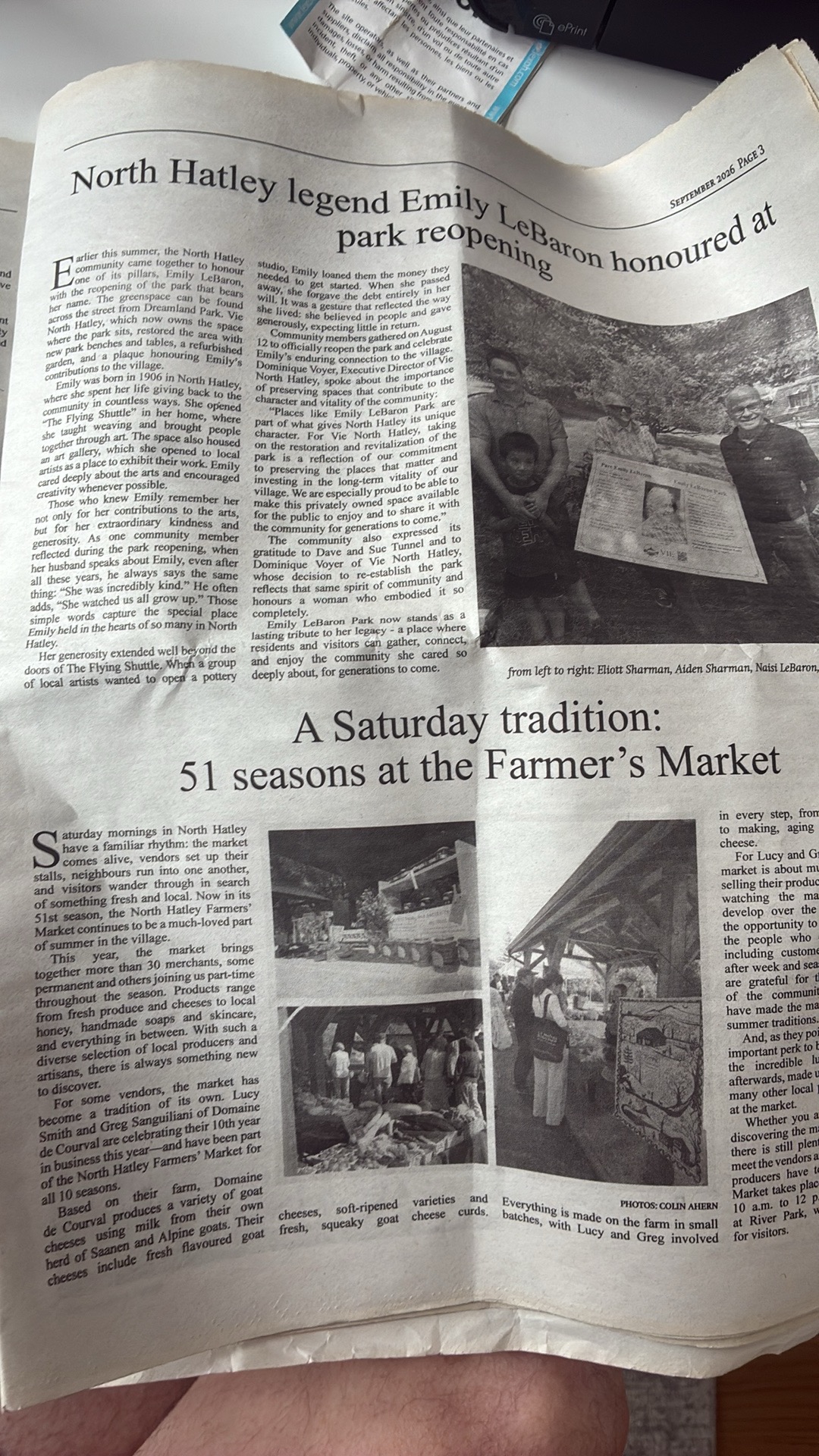
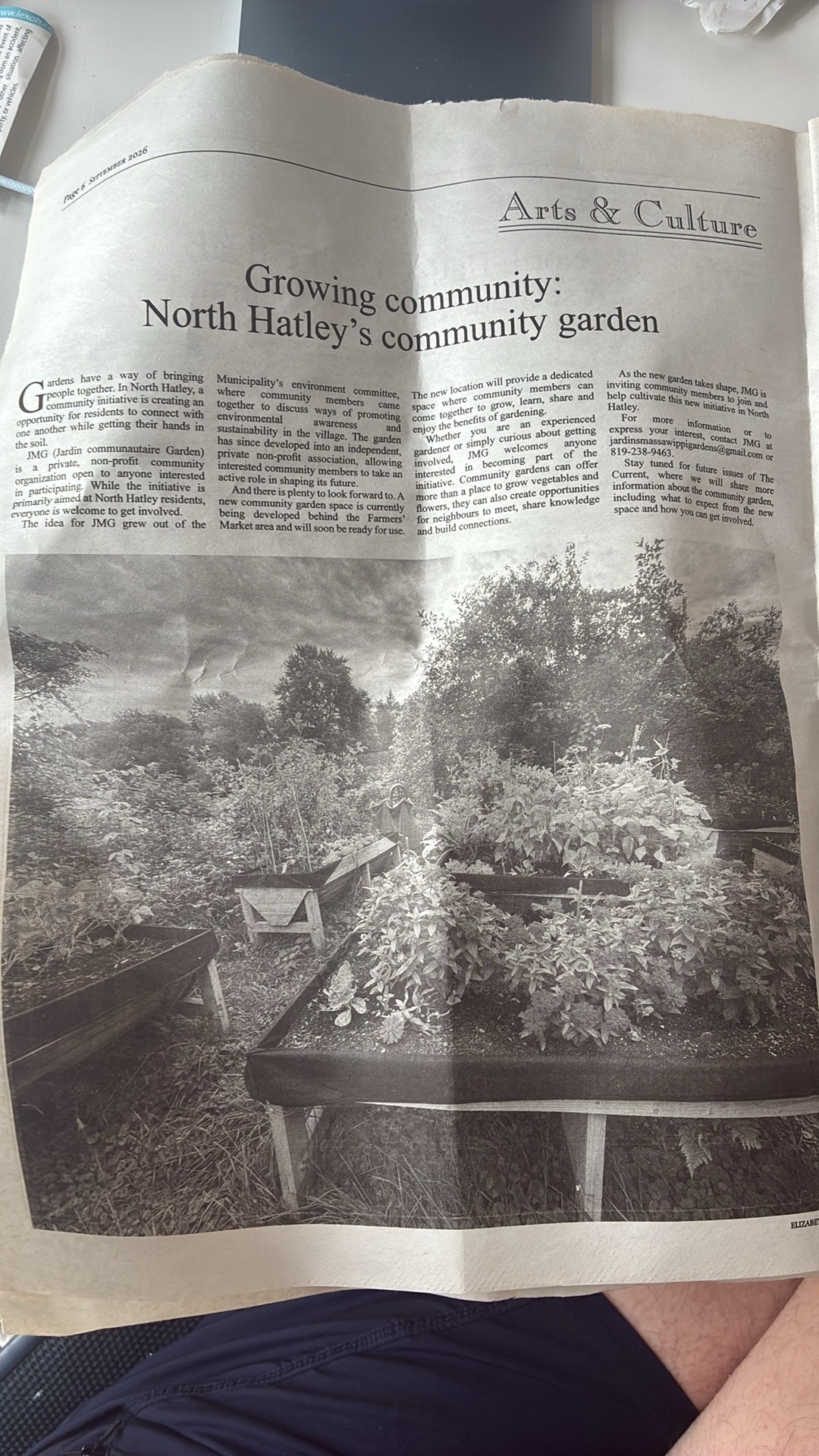
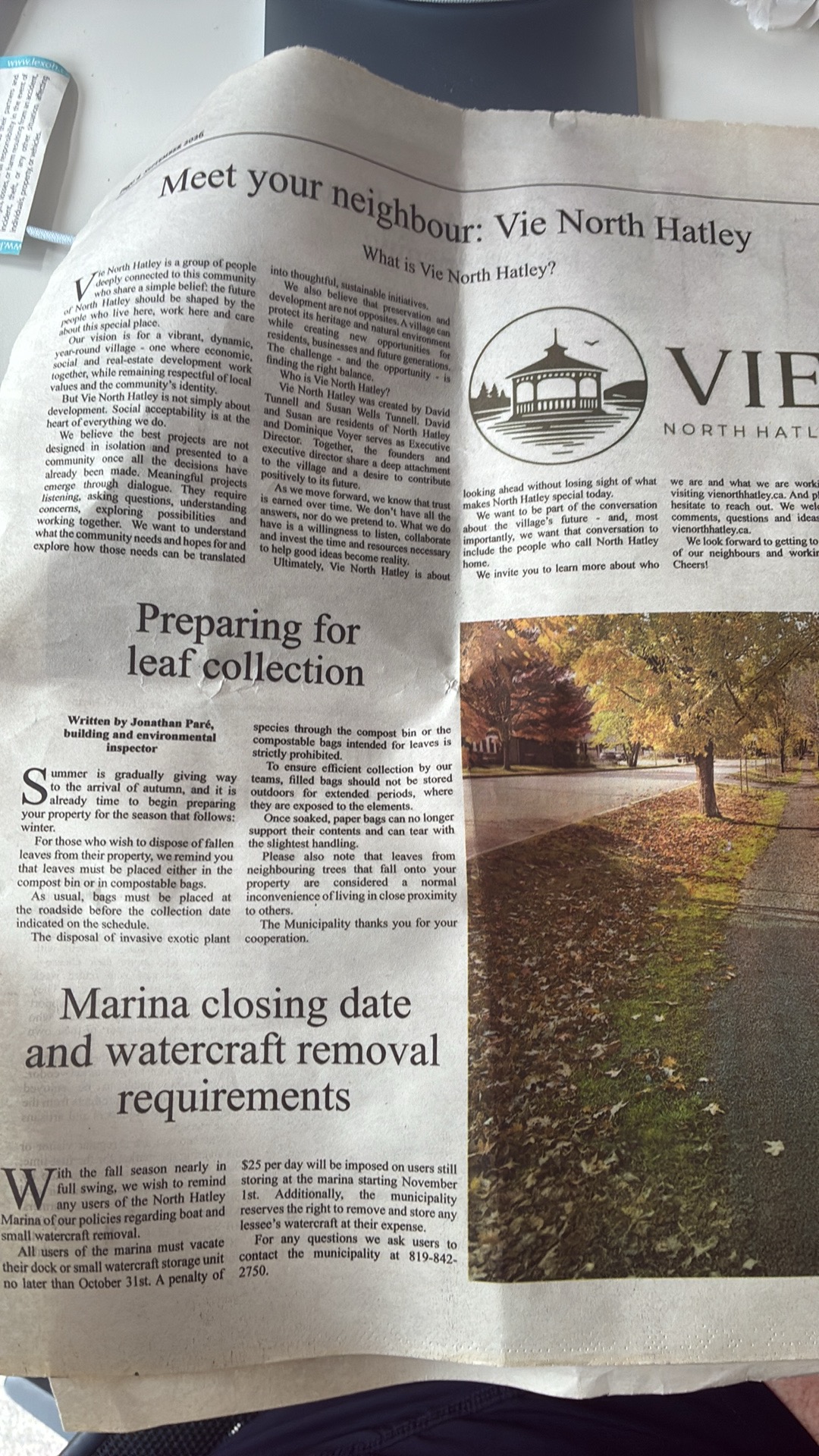
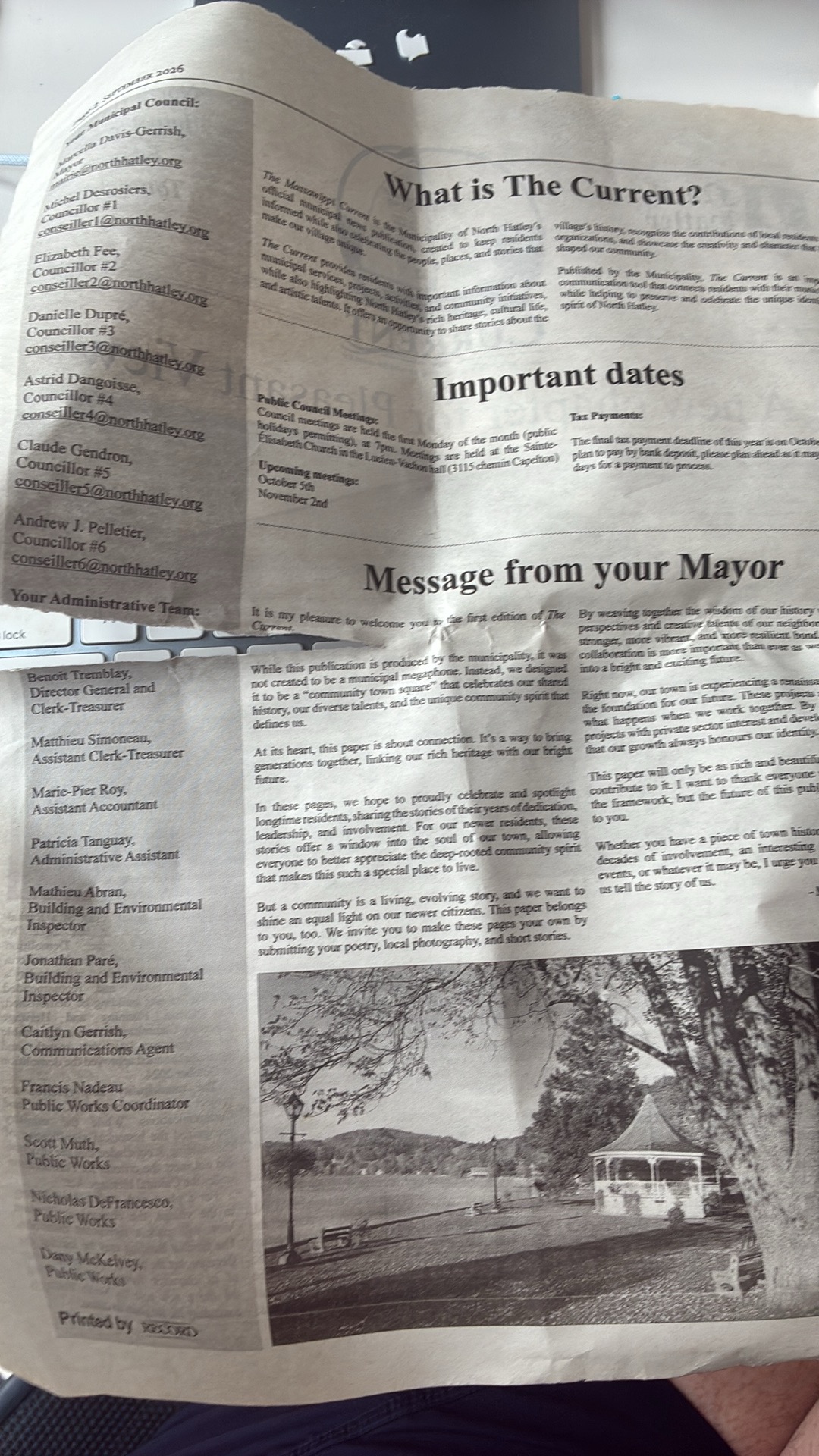
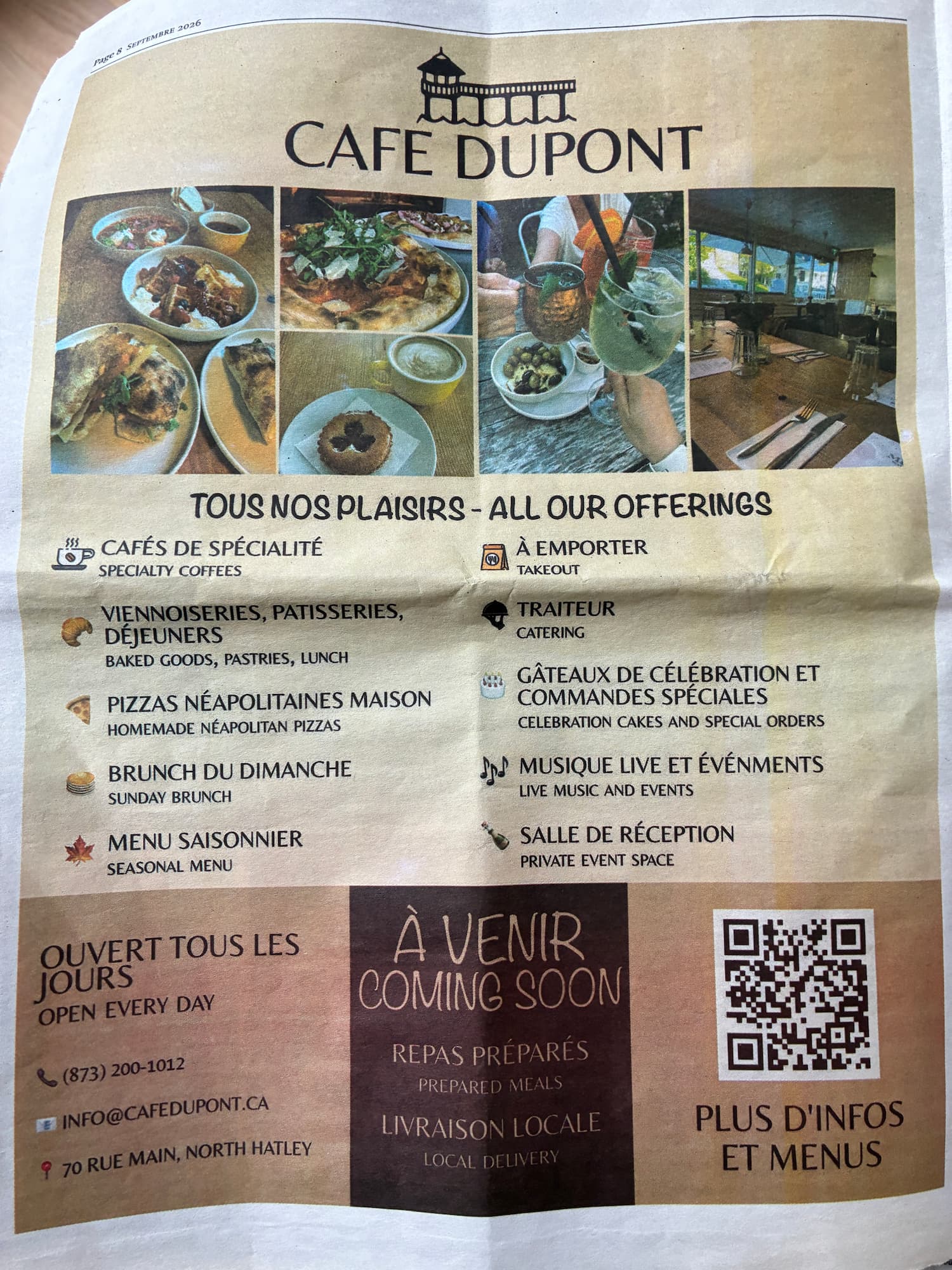
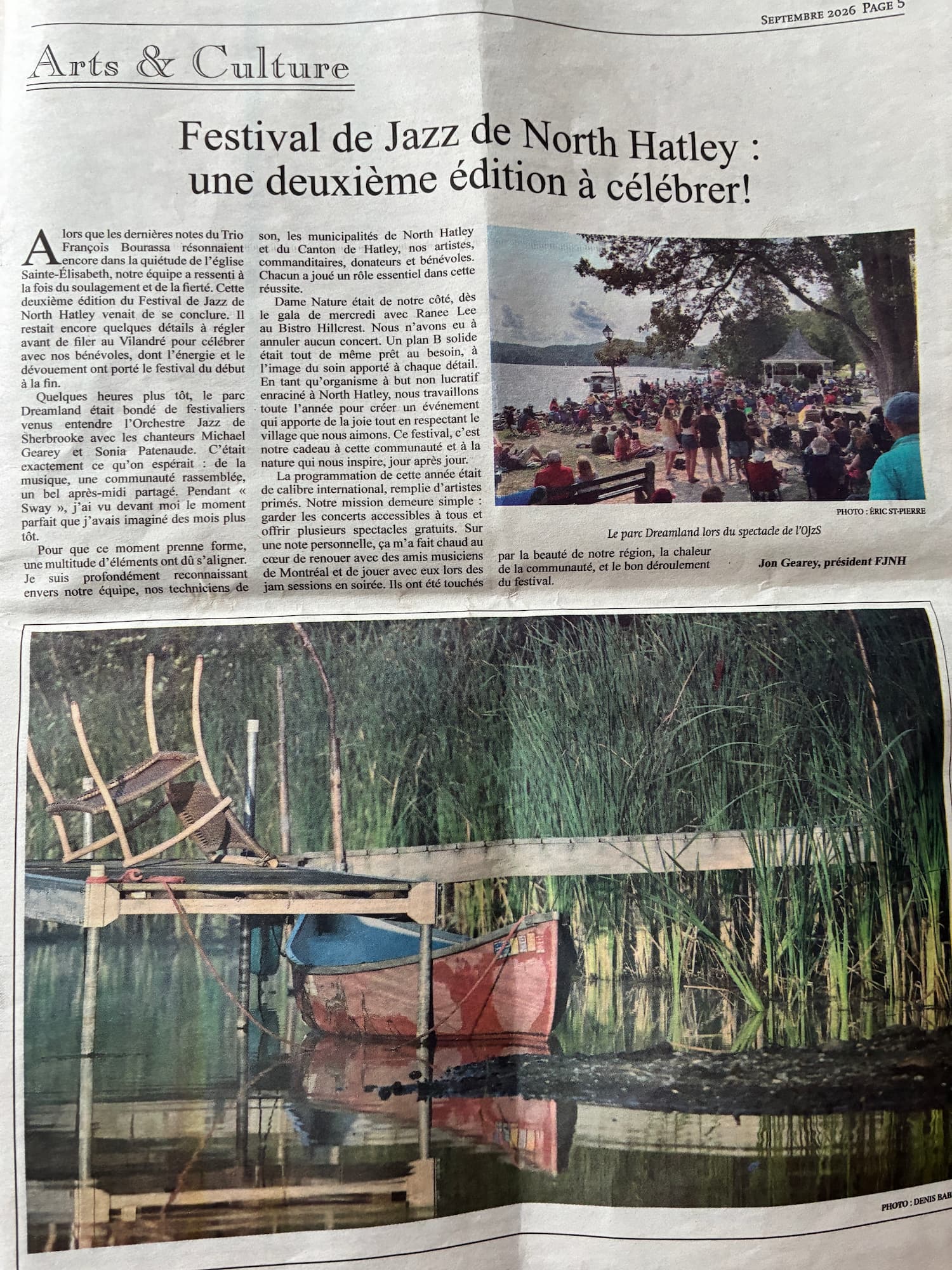
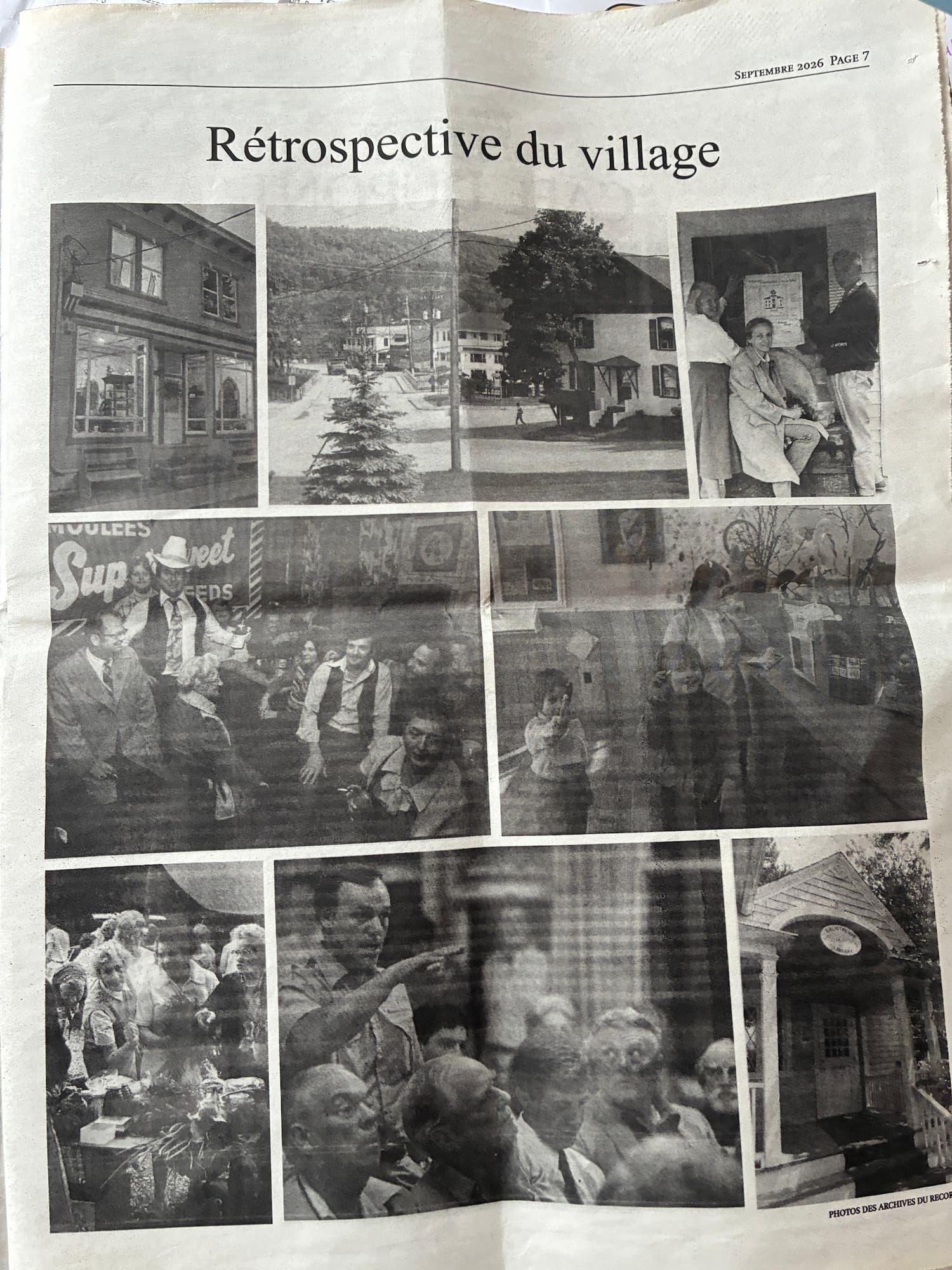

First, I want to commend our municipal administration for this initiative. Any effort to improve communication, showcase our community, and strengthen our sense of belonging deserves recognition.
That said, allow me to share a few observations!
A great initiative, but budget priorities raise questions
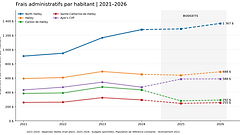
While the Municipality announced, during last Monday’s financial presentation, a $458,000 deficit for 2026, we are still waiting for our welcome signs to be installed. This $12,600 project, announced in 2024, still appears to be held up by a lack of funding.
You can consult the 2025 financial information here: 2025 Financial Information — Municipality of North Hatley
Perhaps advertising revenue will fully cover the production and distribution costs of the new newspaper. I certainly hope so!
However, I would like to know the actual cost of this publication, how much advertising revenue it generates, and what municipal resources are being allocated to it.
I am pleased to see this new publication, but I continue to question our administration’s budget priorities.
Even if advertising revenue fully covers the newspaper’s expenses, producing it still requires municipal staff time and administrative resources. With so many municipal projects already underway, our administration appears to have a full workload. It is therefore reasonable to ask whether this additional responsibility could place further demands on municipal employees.
A newspaper to bring generations together
In her introductory message, Mayor Marcella Davis Gerrish explains that this publication aims to bring generations together by connecting our rich heritage with our promising future.
She also describes the newspaper as a window into the soul of our village, helping everyone better appreciate the deeply rooted community spirit that makes North Hatley special.
She further emphasizes that the publication will be as rich and vibrant as the people who contribute to it.
That is an invitation I find particularly interesting!
I sincerely hope this newspaper becomes a space where residents can share their stories, ideas, and perhaps even differing opinions on municipal issues.
Artificial intelligence: a double standard?
Allow me to return to my now-famous Chinese water torture analogy: the questions I keep asking until the answers are complete!
One detail particularly caught my attention: several articles in the newspaper are unsigned.
Out of curiosity, I submitted several texts to Pangram, a tool designed to detect content potentially generated by artificial intelligence.
Of course, even a high-performing detector like Pangram can make mistakes. Several factors can influence the results, including translation, text length, editing, and the method used to submit the content for analysis.
I conducted the exercise in two ways: first, by submitting a photograph of the text directly to Pangram, and then by asking ChatGPT to transcribe the text from the same photograph before submitting that transcription to Pangram.
The results should therefore be interpreted with caution. They are by no means proof that the articles were written by artificial intelligence. Rather, this was an exploratory exercise intended to provide some indication of whether the technology may have been used.
The scores cannot identify who wrote the text or determine whether artificial intelligence was used for the initial draft, translation, or simply editing.
AI detection scores for the Mayor’s message in Le Courant
Nevertheless, this raises an interesting question:
Does the Municipality itself use artificial intelligence to write, translate, or edit some of the articles in its new official newspaper?
If so, I personally have no problem with that!
However, in my opinion, it would be appropriate to disclose its use, particularly in an official publication funded or produced using municipal resources.
The Municipality previously made a point of highlighting AI use by NorthHatley.info and Philippe Marchesseault
Let’s go back to October 1, 2025, during the municipal election campaign.
At that time, the Municipality distributed a notice to residents concerning NorthHatley.info, questioning the reliability of certain publications and explicitly mentioning my use of artificial intelligence.
Read the Municipality’s October 1, 2025 notice concerning NorthHatley.info
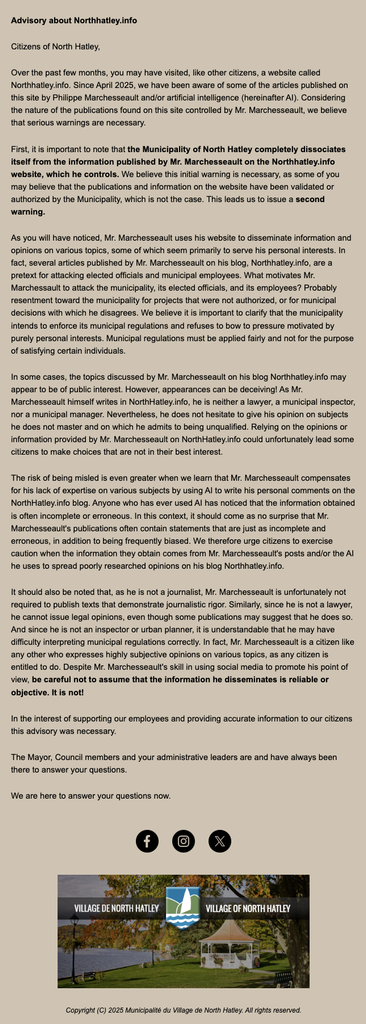
In that notice, the Municipality stated:
“Since April 2025, we have become aware of certain articles published on this website by Philippe Marchesseault and/or artificial intelligence (hereinafter referred to as AI).”
I am not suggesting that the municipal administration is doing anything wrong by potentially using AI. I am simply questioning the consistency and fairness of its approach.
Notice emailed by the Municipality of North Hatley to residents on October 1, 2025.
Analysis of the North Hatley Info Communiqué to All Citizens
100% written by a human.
Artificial intelligence: a tool I openly use myself
I have never hidden the fact that I use artificial intelligence in my research, analysis, and writing for NorthHatley.info.
I use it every day to perform calculations, analyze documents, revise my writing, research information, and compare data.
I see AI somewhat as a modern-day version of Antidote or Microsoft Word, with additional capabilities for analysis, research, and writing.
But one thing seems essential to me: transparency about its use and accountability on the part of those who publish the content.
This expectation seems even more important when it comes to a local newspaper presented as an official municipal publication.
After all, whether a text is written entirely by a person or with the assistance of artificial intelligence, the fundamental questions remain the same: Who takes responsibility for it? Is the information accurate? And are residents properly informed? Several articles, after all, are unsigned.
Most importantly, if the use of AI is worth highlighting when it comes to NorthHatley.info, why shouldn’t the same level of transparency apply to North Hatley’s official newspaper?
In summary
I sincerely welcome this new municipal initiative and hope it continues to grow and improve with future editions.
However, I hope transparency will be an integral part of its operation, whether regarding its funding, editorial responsibility, or the potential use of artificial intelligence.
If the Municipality considers it relevant to highlight AI use in NorthHatley.info publications, it would seem only consistent to apply the same principles to its own communications.
Beyond these questions, my greatest hope is that Le Courant becomes a genuine community forum, open to residents’ contributions and a diversity of perspectives.
With that, happy reading of Le Courant!
What do studies say about Pangram’s reliability?
Understanding How Pangram Works
The percentage displayed by Pangram represents the proportion of the text identified as AI-generated, rather than the probability that the text was generated using this technology. — La Presse
This means that the percentage displayed by Pangram indicates how much of the text it considers to have been written by AI, rather than the likelihood that the entire text was generated by AI.
For example:
If Pangram displays 60%, it means that it estimates that 60% of the text has characteristics associated with AI-generated content.
It does not mean that there is a 60% chance that the text was written by AI.
Research findings have generally been favourable to Pangram, particularly compared with several other AI detection tools. I invite readers to assess its reliability by reviewing the available studies.
Reference: Pangram — Third-Party Evaluations
| Source | Findings |
|---|---|
| University of Chicago study (2025) | Pangram demonstrated strong performance and a low false-positive rate. |
| Academic study published in June 2026 | Detected 97.5% of fully AI-generated texts in the study sample. |
| Pangram 4 — Manufacturer’s data | Reported false-positive rate of 0.0026% for French-language texts. |
| Le Monde, September 2026 | Acknowledged strong overall performance while highlighting limitations and the possibility of errors. |
Additional analyses conducted with Pangram
Comments (0)
No comments yet. Be the first to react.
Contribute to this article
Do you have useful information?
A cost, a document, a photo or a correction. Every piece of information is verified before being added to the article or to an issue.